
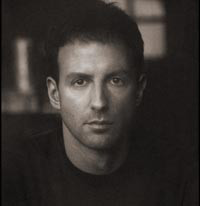
Born in London, Nick Brandt has become one of the most successful and renowned contemporary photographers , who’s career and passion for photography came to the surface in 1995 when, he visited Africa for the first time to direct and film the Michael Jackson, ‘Earth Song’ music video. It was this iconic video in which made Brandt become so infatuated with the landscape and wildlife in which Africa had to offer, and therefore made a career transition from film and devoted his work to photography.
Shooting mostly via monochrome (black and white), Brandt is known to eschew the use of telephoto lenses, in a way of ensuring he produces intimate animal portraits instead of wildlife reportage / documentary, quoting “I’m trying to capture the animals in just being, their personalities, their souls and to photograph them in the exact same way as if I were photographing a human being” .
Another reason why Brandt tends to make preference to black and white photography compared to colour is for the fact that whilst colour focuses on the essentials of animal expressions, desaturation to black and white creates effects that are somewhat timeless. To elaborate, although he photographs wildlife, hes also trying to deliver a message within his imagery, a message so important that can be clearly understand through black and white. The message being delivered is about the loss of wildlife and conservation due to various human activities… ie, poaching, wildfires etc.
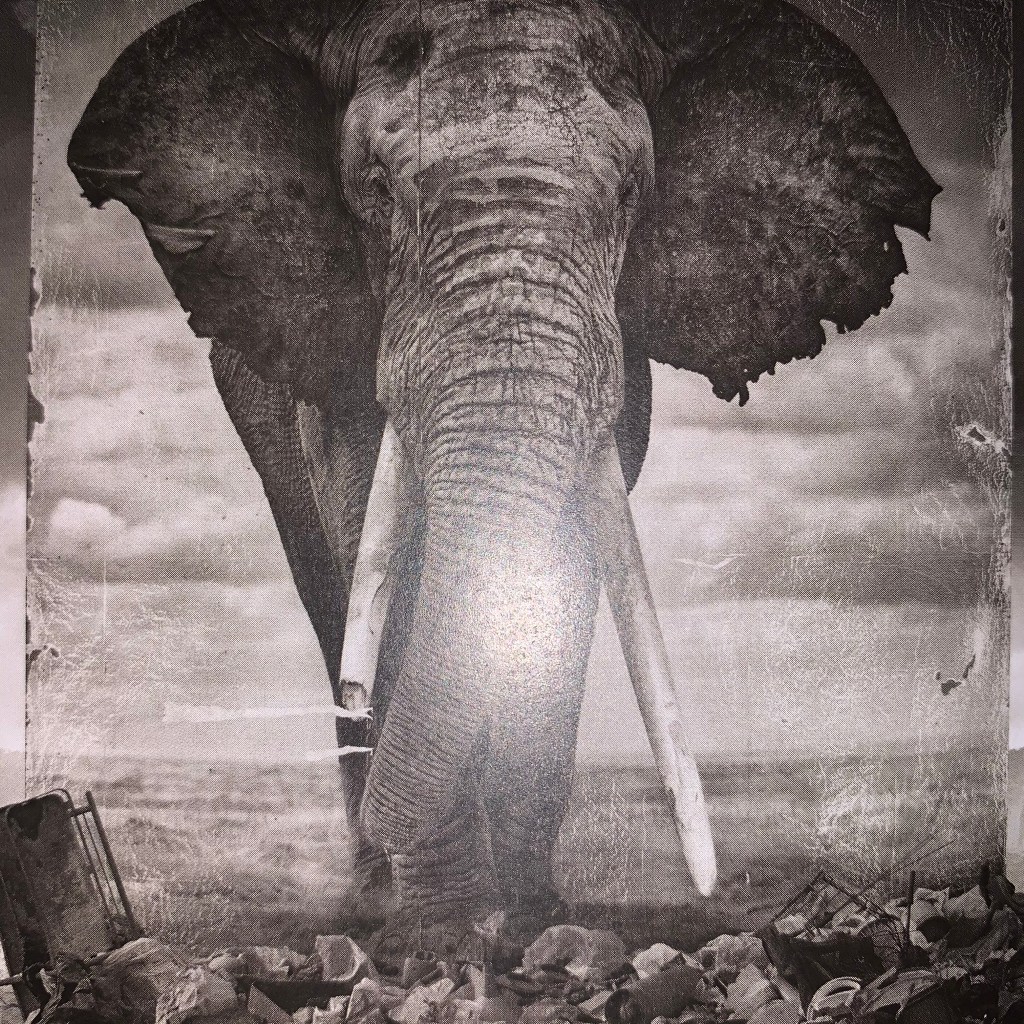
Captioned ‘Wasteland with Elephant (2015)’ this image composed by Brandt is a full length landscape shot however I sourced the first half of the image in order to allow the features of the elephant to stand out, such as its wrinkles on the trunk and rough edges on the ears.
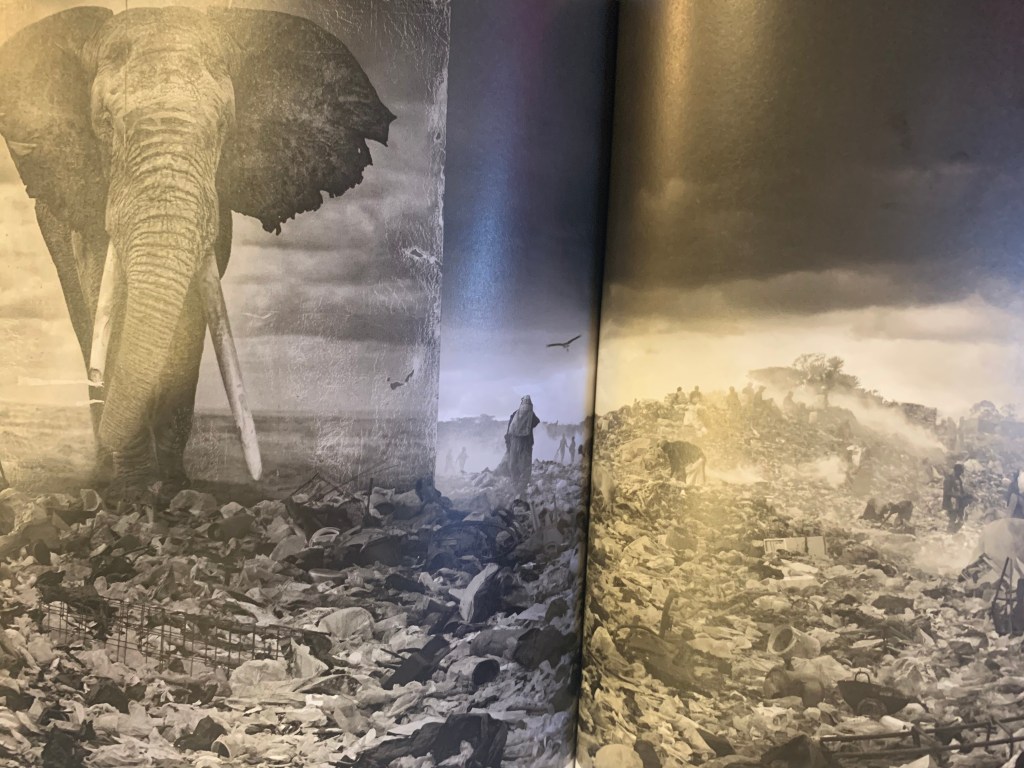
What you see here is the full length image of the shot above, which evidently backs up the caption of ‘Wasteland with Elephant”
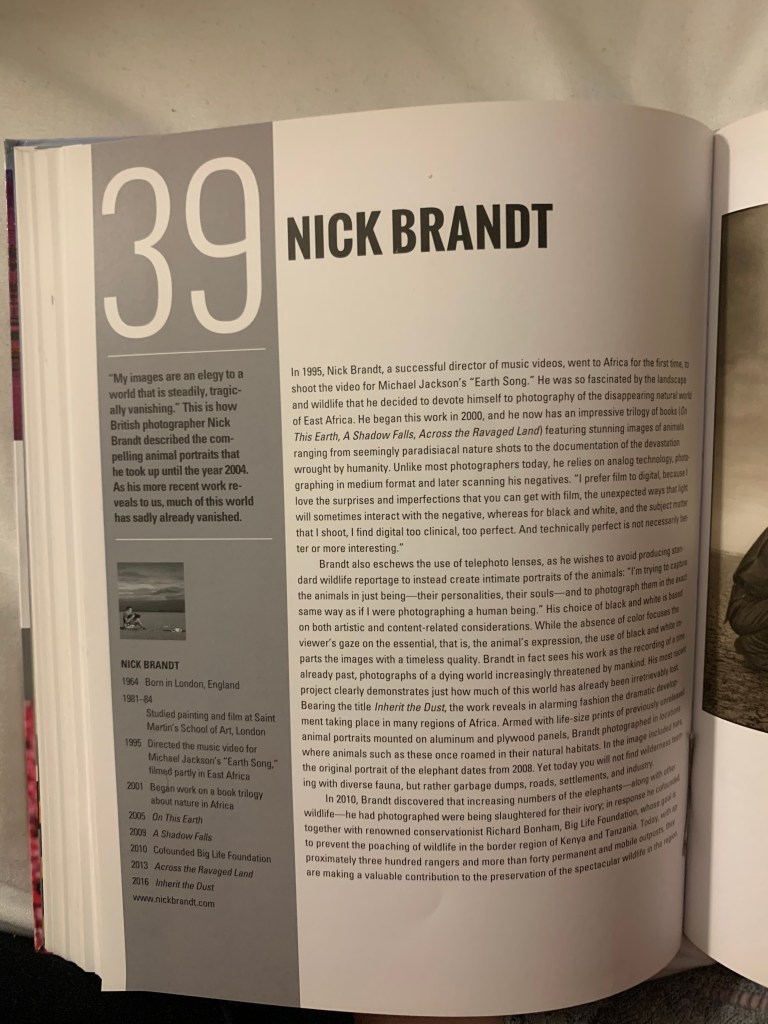
Brandt has been listed as the 39th photographer in the ’50 Contemporary Photographers, You Should Know ‘ book written by Florian Heine and Brad Finger, which is where both the above images and research was sourced, therefore demonstrating a secondary source.

