
Today’s 3 hour workshop consisted of a brief tutorial / lecture into composition and its relevance to photography, before heading out into the city centre to produce a series of images in which showcase our understanding of rule of thirds, depth of field, golden ratio and leading lines.
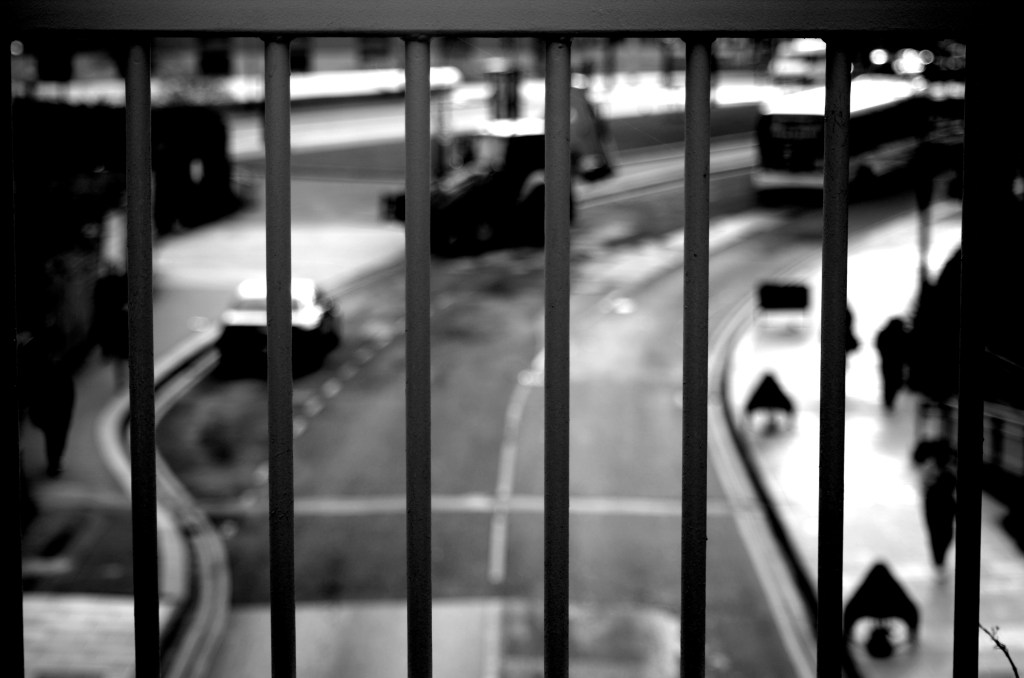
Shot in monochrome as it’s professionally known, image one shows a railing, in which the main subject is in focus with the background blurred, therefore implying a shallow depth of field for the reason being an aperture reading of f/4 was used. As well as this, I think shooting in monochrome (black and white) creates a 1900s vibe as the taxi shown in the middle railing appears to look more traditional.
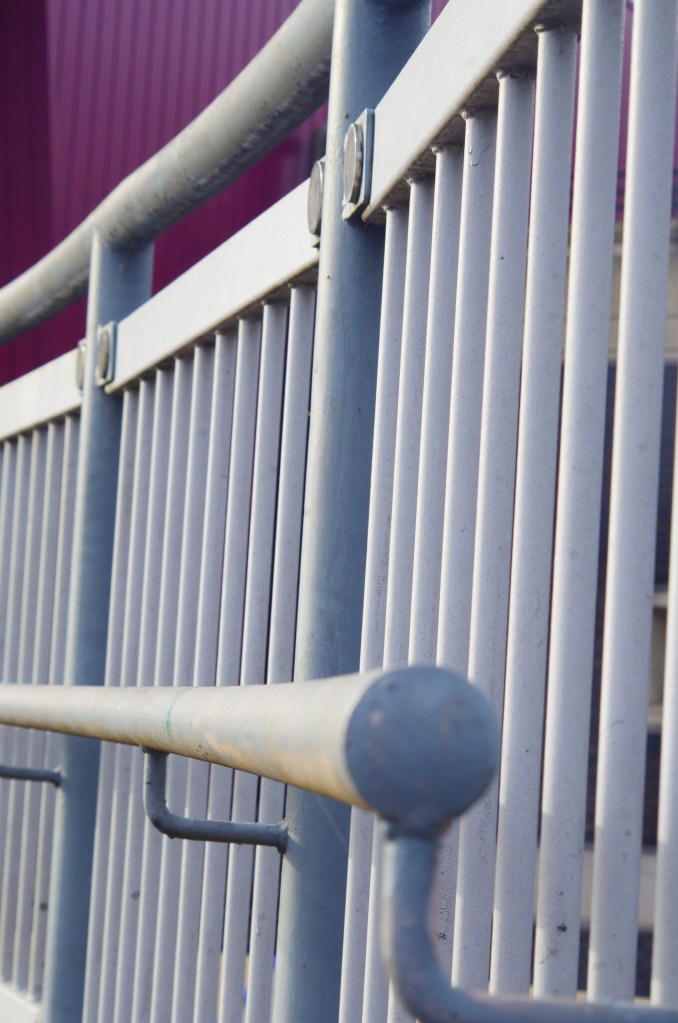
Another leading lines example, only shot from another angle, this railing is showing multiple leading lines. For example the banister is cylinder shaped and leading you towards a bend, with the main structure of the railing leading your eyes upwards, which I think works well when you observe the image overall.
The exposure triangle settings for this image were an aperture of f/13, shutter speed of 1/100 with an ISO of 200 which would be ideal to create greater depth of fields, however it’s only the circular beginning of the railing thats out of focus, therefore indicating the foreground is slightly blurred.
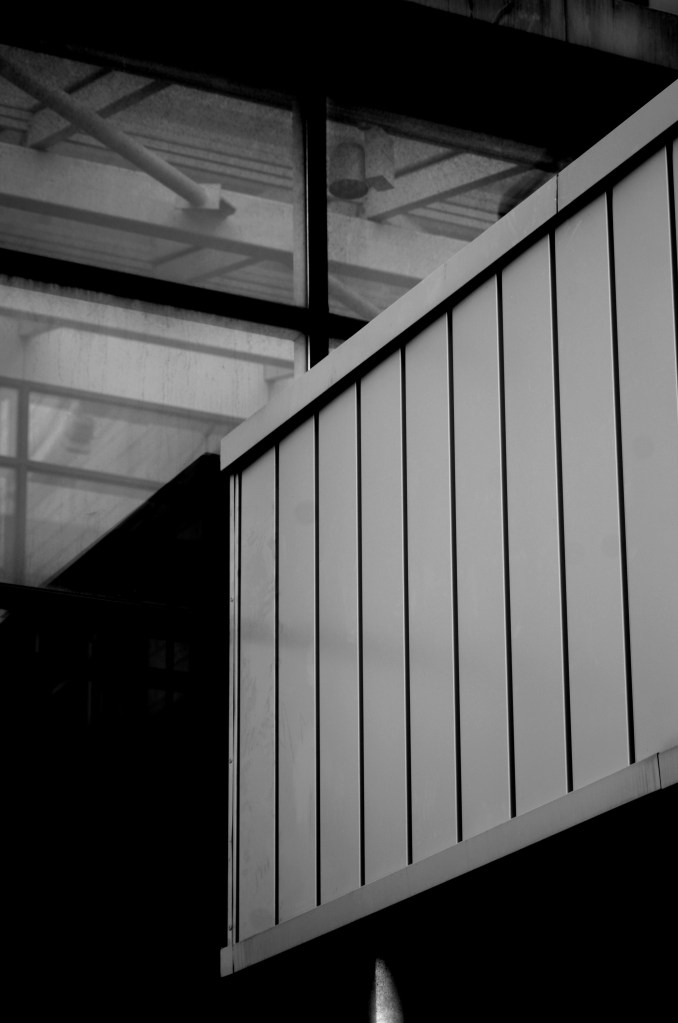
Composed in portrait orientation, this image got a lot of positive feedback from my photography peers when reviewing one another’s work and I think this shot in particular got more recognition for the fact I’ve demonstrated both the leading lines and frame within a frame technique.
To specify, on one hand, leading lines are a composition technique in which the photographer captures an image that paves a path / road for your eyes to follow, leading you to the main subject, whilst frame within a frame is a technique where more than one rectangle can be seen in shot. Going into depth, your camera frame, no matter what orientation or lens used, will always be rectangular, and any rectangle shape seen within the image such as a window or a door frame, is considered a frame within a frame.

