In the session of Monday 20th January 2020, as part of the Media in Context module we watched an episode from the Netflix series‘Black Mirror’ titled Playtest, an episode that evidently demonstrates the semiotics and mise-en-scene, both which are technical requirements within the television and film industry, however can also provide relevance and intertextuality in photography.
Mise-en-scene
Mise-en-scene, is a French term meaning “to place” and a combination of 5 elements in which together both develop and create a frame, which I’ll individually break down for the purpose of analysing the episode of Black Mirror
Camera Shots: Like all TV and film productions, the camera angles have to be thoroughly planned out and brief met in order to ensure the result of the production is a success, and therefore camera shots apply within the photography sector as they may appear as moving images on screen, but in actual fact are single framed shots, when at the pre-production and production stages.
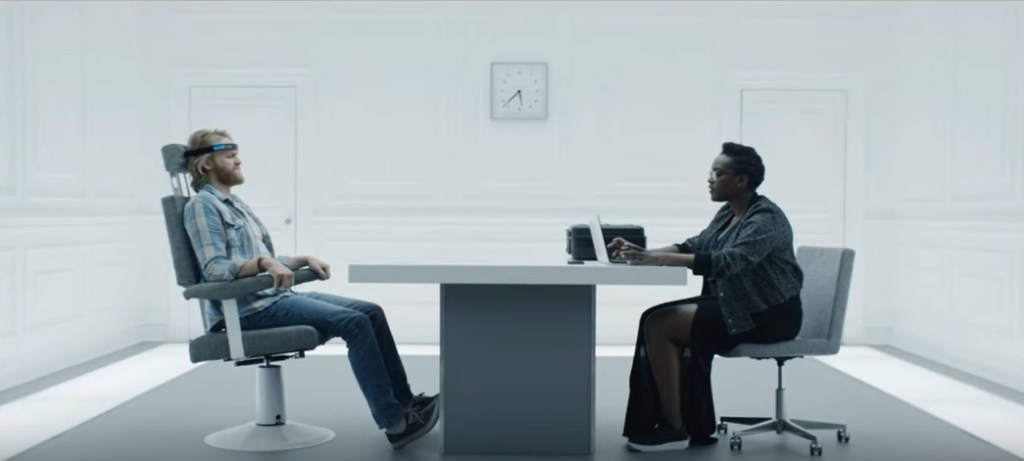
Wide Angle: What this screenshot demonstrates is a wide angle shot to help set / establish the scene, which in this case shows Cooper and Katie in a room thats completely empty with only a desk, chairs and clock for distraction. As well as the wide shot, this could also be considered what’s professionally known as a ‘two shot’ meaning there’s two people seen in the frame and is usually demonstrated when there’s an ongoing conversation from person to person.
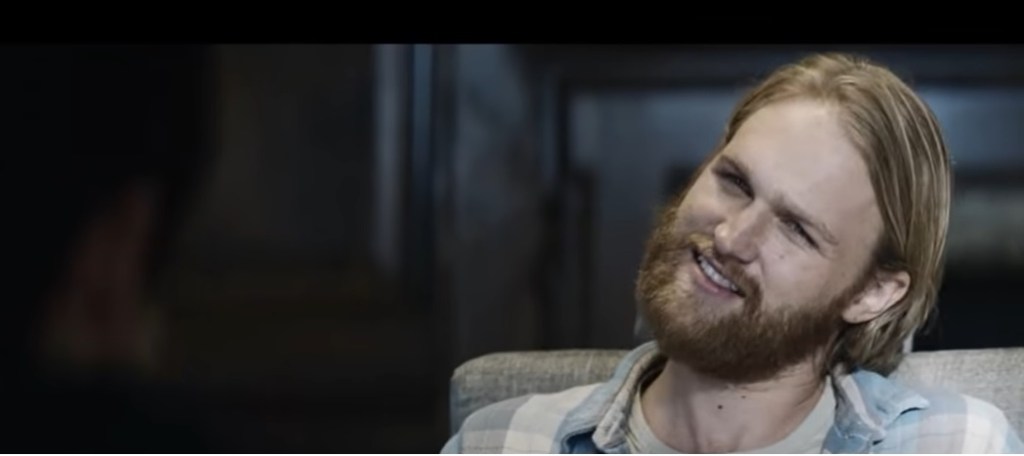
Over the shoulder: Another way of highlighting a conversation between two people in a particular scene is by whats known as an an over the shoulder shot, a shot in which the camera operator films over a characters shoulder whether that be them talking or listening to the opposite character on screen, the rule applies both ways.
Lighting: Lighting plays a key part in the photography and TV and film industry for the reason being that it’s main purpose is to produce various moods and atmospheres depending on the scene and narrative in which the production is following. For example, with Playtest both considered and listed as a drama and thriller, you’d expect to see lighting that’s majorly under exposed in order to create an eerie feel to the scene that’s in play.
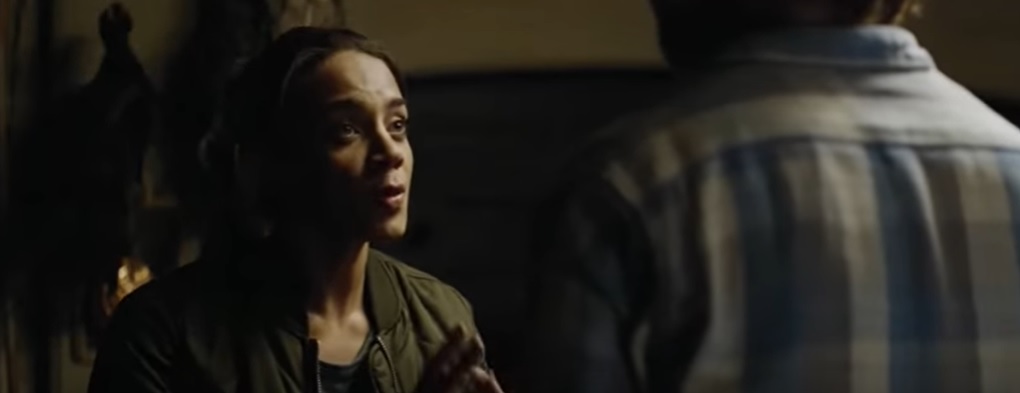
Rembrandt: The term ‘rembrandt’ derives from it’s origin of the Dutch painter of the same name, and is commonly produced within a studio based environment due to it’s setup, however the lighting style has also been outlined in the episode of Black Mirror, for the reason being that a triangle can be seen under Sonja’s right eye, which is also seen in the portraiture work of Rembrandt and is created with a key light and a circular reflector.

